Coaster Mark II

As someone who really loves lurid colours, it probably comes as no surprise that, when it comes to fabrics, I really, really love batiks. There’s enough variety of prints, patterns and colours that I could probably be entertained forever. The ‘mottled’ effect you get from the resist dyeing process also means that one piece of fabric has a huge amount of variation within it, which for me all adds to the creative fun.

1 (2)

Read More »

Britex Fabrics, San Francisco

I’ve been to different places in the States several times over the years but so far, the West Coast has remained unexplored territory for me. When the opportunity came up to visit California, I obviously couldn’t resist going to find out whether there was anything on offer to rival some of the lovely places I saw in Boston on my last visit.

1 (14)

America tends to do big, bold and grand very well and Britex Fabrics in San Francisco is no exception. It is a multi-storey bonanza of all things craft related and has one of the best collections of craft gadgets I’ve seen outside of Japan.

Read More »

Ice Dyeing

I’ve recently discovered the joys of sprinkle dyeing, where the dyeing process is reduced to 1) soak yarn at required pH, 2) dump powder dye directly on yarn, 3) fix dye as necessary. No solutions, no mixing, no syringing. I can actually clean up in less than five minutes after sprinkle dyeing, ideal for a busy schedule, dangerous as I am now drowning in very lurid sock yarns with no time to knit socks.

1

While roaming around Pinterest one day, I saw some interesting looking fabric that had been dyed using a technique known as ‘ice dyeing’. The name sounds a lot more glamorous and complicated than the technique actually is. All you do is dump a load of ice on your fabric, put powder dye on the ice and wait but, for such an easy technique, the patterns it produces are actually very interesting.

Read More »

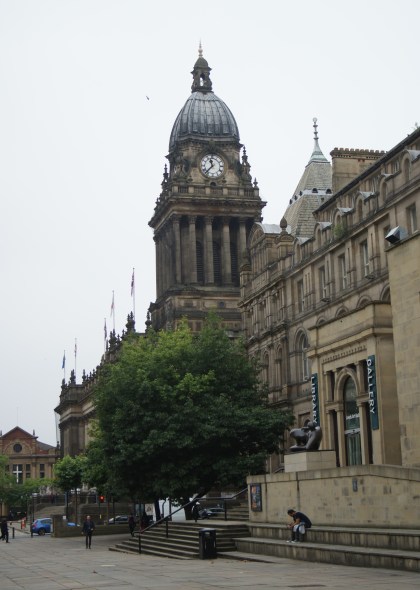
Leeds Market and City Museum

When I’m visiting somewhere new, I take a multipronged approach to trying to uncover the local craft scene. The first stop is usually Ravelry’s wonderful Yarn Shop finder, an essential part of planning any local roadtrip. Digging into the forums for local groups can be a great way to discover more hidden gems as well, particularly as there are a lot of long-running craft shops that predate the Internet and still don’t have a web presence.

The second part is usually hammering my search engine of choice with the names of various crafts and the city. This often has varying levels of success, as again, it is dependent on the shop having a good online presence. Yelp can be really useful when there’s a local crafter who has put up their ‘top 10’ list of places to see. Unfortunately, it’s only as useful as what people have contributed and it’s not so popular outside of big cities.

2

This week’s adventure was to Leeds, home to the Royal Armouries Museum (not to be missed) and a historical centre for the wool trade. If you don’t have a car and aren’t planning on venturing much further than the city centre, Leeds conveniently has rather a lot of crafty goodness one place, Leeds Kirkgate Market.

Read More »

Museum of Fine Arts and Futuristic Textiles

The Museum of Fine Arts, Boston boasts a collection that covers every continent, spanning over nearly three thousand years. It’s an impressive feat for a museum that only covers three floors yet still manages to cover every discipline in the fine arts.

15.jpg

The MFA also do free entry on some Fridays as part of the ‘Free Fun Friday’ program, which means you have no excuse for not popping in for a quick visit. Whereas the Victoria and Albert museum might take you several lifetimes to see all of it, you can see all of the MFA in a few hours so it really is a breakneck speed tour through civilisation.

Read More »

Lowell and the New England Quilting Museum

Disclaimer: This post contains affiliate links if you wish to support the blog. For more information, please click here.

Lowell is a city to the north west of Boston which birthed the American Industrial Revolution. As you walk around, you can still see the mills and textile factories that housed the first ‘power looms’ in America that automated large parts of the weaving process and manufactured the coarse cottons that take their name from the city.

1

After the Great Depression and decline of the textile industry, Lowell became something of an economic wasteland. However, now, Lowell has been transformed a National Historical Park, which is a slightly confusing name because the Park part refers to part of the city itself. A huge amount of effort has been made to preserve the history and make for an interesting and informative visit.

2

Read More »

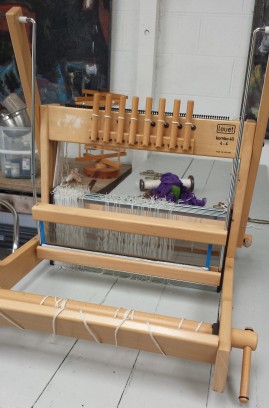
Creating a Weaver: Day 1

There is nothing quite like getting stuck into a new thing. You haven’t quite yet realised how impossibly hard it will be to reproduce all the maddeningly complex projects you’ve been eyeing up on Pinterest and you’re new enough that you’re pleased by any new creation, no matter how wonky the stitches or sad the seams are.

It was back in Kyoto, at the Nishijin Textile Centre, that I first had a go at weaving. Nishijin is the legendary textiles district that gives its name to Nishijin-ori, the fabric produced there. It is known for its quality and the incredibly intricate patterns and designs in the weave that are often used for highly elaborate obis. In more modern times, nishijin-ori is often used in neckties or gamaguchi, the metal clasp purses that are very popular in Japan.

25.jpg
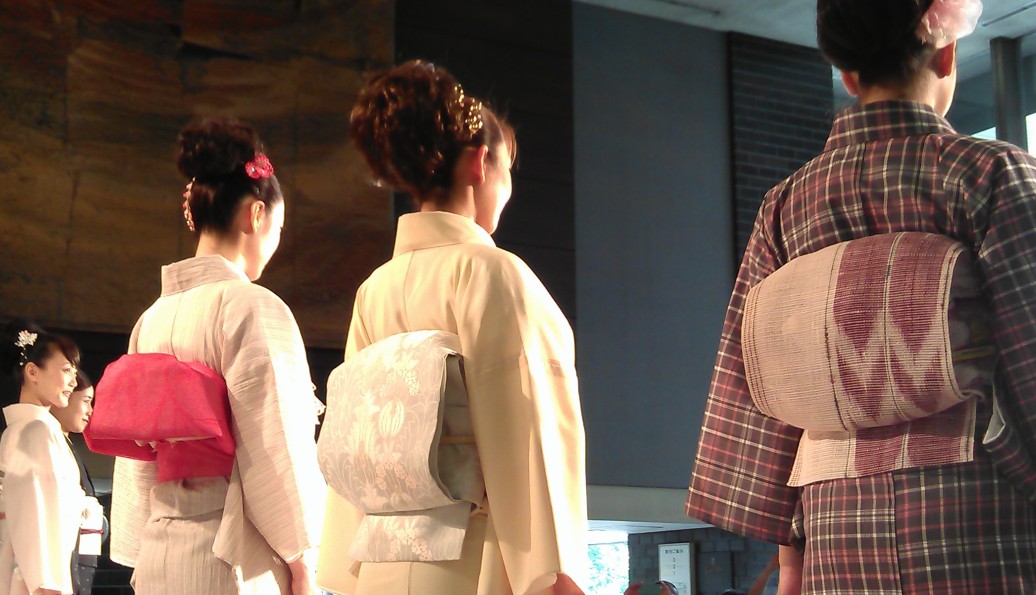
Kimono fashion show

Read More »

National Trust: Newark Park

The National Trust (or the National Trust for Places of Historic Interest or Natural Beauty if you’re feeling particular) is an organisation dedicated to the conservation of ‘lands and tenements of beauty and historic interest.’ Many of the iconic English country houses are maintained by them and even a few bits of the British coastline.

As a child, I spent many hours being carted off to various National Trust properties, usually with a fabulous picnic in tow. I remember this fondly but I have no idea if younger me was nearly so appreciative of quite how fantastic some of the architecture and history I was seeing was.

As an adult, the picnics mostly consist of handing over my life savings at the National Trust’s café, missing my grandparents’ ability to identify the maker and date of every piece of ceramic, but feeling very appreciative that someone has kept these snapshots of history alive. They also include an inordinate amount of time staring at textiles and grilling the poor volunteer stewards for as much information as I can glean from them.

2

Newark Park is located in Gloucestershire, close to Wotton-under-Edge and for a house with a reputation for being dank and cold, has some very interesting fabrics and materials in it.

Read More »

London Adventures III: Victoria and Albert Museum

The trip to London concluded to one of my favourite museums, the Victoria and Albert (V&A) museum. Whenever I’m in London, I always try and visit the V&A and I’ve still only seen a small fraction of the incredible collection they have.

1

Everything about the V&A is fabulous – the building, the exhibitions, the entire scale of the museum. If you can think of it, they probably have a collection on it. I’ve seen everything from a collection of locks and locking mechanisms, to armour for animals alongside more traditional pieces of art.

2

As it is a British national museum, entrance is absolutely free. You do have to pay to see the special exhibitions (tickets are around £15 for non-members) they have but that is it. They have an extensive gift shop and cafes if you want to support the work they do, which I would wholeheartedly encourage. There are few museums with collections as extensive and varied as the V&A’s.

Read More »