Heating Procion MX Dyes and Science Sundays

While discovering that Procion MX dyes are very happy to dye wools, I came across something else that gave me pause for thought. Although there’s not a wealth of information on using Procion MX dyes with acid, most of the advice that is out there says you need to steam or heat the fibre after applying the dye.

7

For acid dyes, heating the dyebath is standard practice to help fix the dyes. Fibre reactive dyes, like Procion MX, don’t require this, which is definitely an advantage when trying to do large bits of tie-dying. The standard advice when working with fibre reactive dyes on cellulose fibres and silks is to do your dyeing, then leave your fibre damp with the dye on it for at least a good few hours, closer to 24, if you want strong colours.

As I tend to like very intense, saturated colours, I tend to err on the side of giving the dye a longer reaction time.  For some short-sighted reason, I’d always assumed that there was some kind of degradation of the Procion dyes at higher temperatures, hence leaving them to react at ‘room temperature’ but seeing as steaming the wool lately with Procion dyes had worked just fine, that obviously couldn’t be the case.

Was there really a way to go speed up Procion dyeing so I didn’t have to wait so long to see what wonderful mess I’d made?
Read More »

The Sea Monster

I’m going to be participating in Spinzilla this year, which is a global event where the sole goal is to spin as much yarn as possible. Of course there’s plenty of silly events to be enjoyed too, like photo challenges, and the general, good social atmosphere to be enjoyed with these big events. Spinzilla will be running 3 – 9th October this year and registration is still open until the end of September if you want to join in!

I very much doubt I’ll be winning any competitions for most spun but I thought it’d be good to get a bit of practice in before the start of Spinzilla. Plus, this poor silk top has been sat, half-spun, for far too long. I’ve even got a pattern picked and needles prepped for the final yarn…

5.jpg

Read More »

Knotty Problems

Murdering skeins is a bit of a hobby of mine. I’m not sure where I developed quite such an aptitude for transforming beautiful bundles of fibre into Eldritch horrors of the knitted world but it’s about the least useful skill a crafter can have.

Sometimes it has been clumsiness or underestimating quite what a disastrous effect travelling can have on your supplies. Sometimes it has been my notorious impatience with wanting to dive into a new project. Other times, I swear I simply turn my back and when I turn around, I’m greeted with a sight that invokes the more colourful regions of the English language.

1

Read More »

Comparing Thread Weights

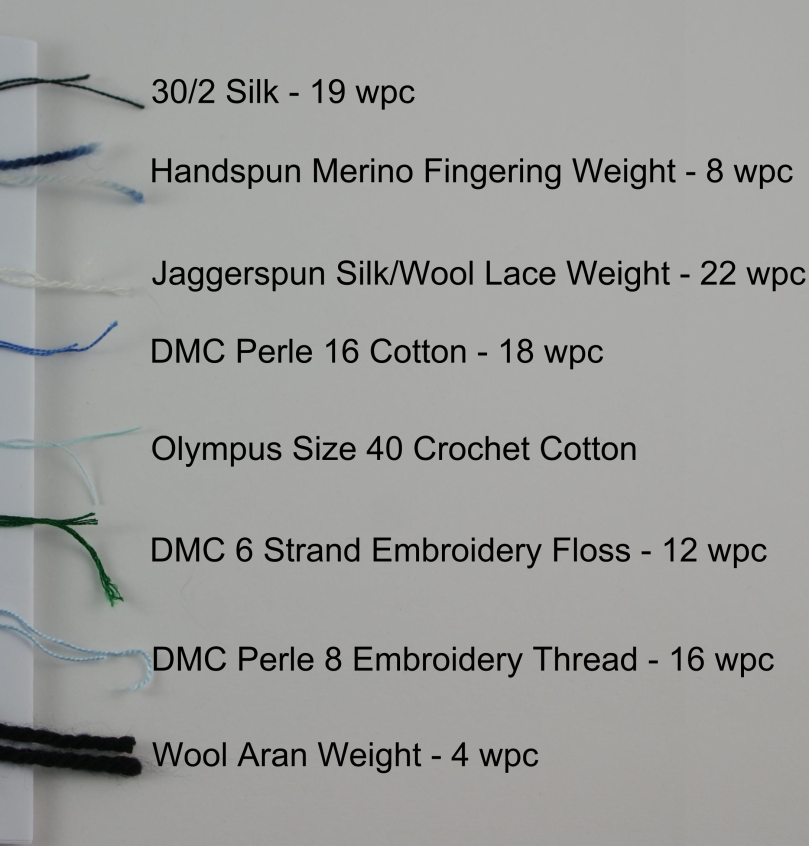
Although most of us love our local craft shops, the unfortunate reality is it is often easier to buy online. Finding brick and mortar suppliers for weaving cottons seems to be particularly challenging which is a nuisance when you’re not too familiar with the naming conventions for thread weights and have no way of seeing them or comparing them.

g3221

To try and help with this, I’ve put together an assortment of threads, from the Güterman sewing machine thread to flat silks, along with the wraps per centimetre to give you some idea of how all the different threads compare.

Read More »

Creating a Weaver: Day 1

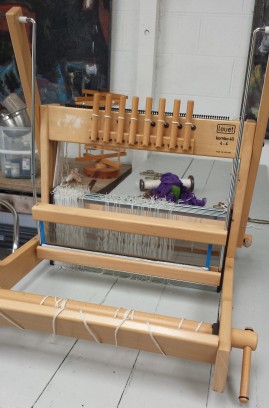
There is nothing quite like getting stuck into a new thing. You haven’t quite yet realised how impossibly hard it will be to reproduce all the maddeningly complex projects you’ve been eyeing up on Pinterest and you’re new enough that you’re pleased by any new creation, no matter how wonky the stitches or sad the seams are.

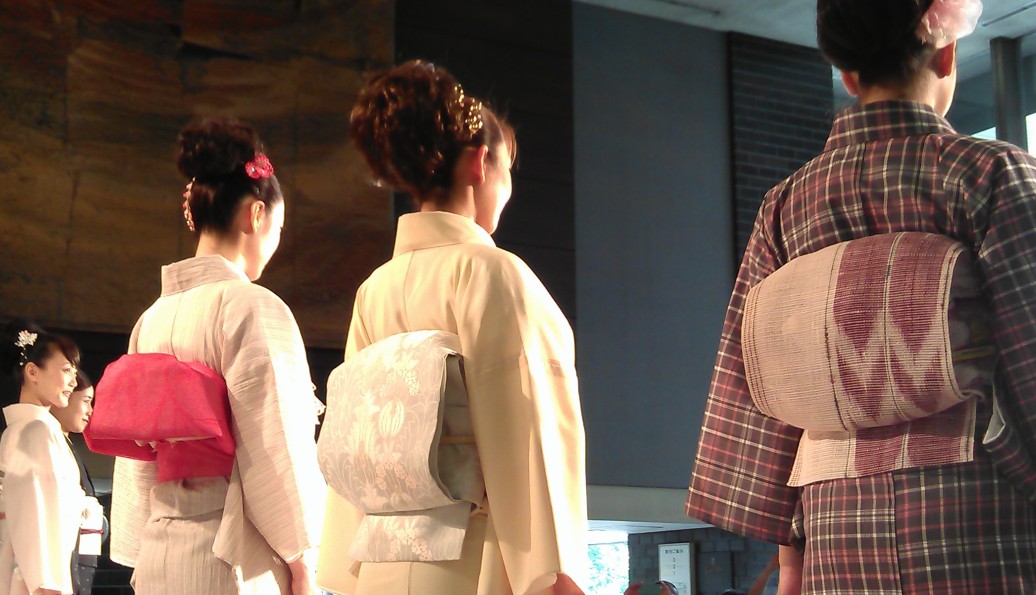
It was back in Kyoto, at the Nishijin Textile Centre, that I first had a go at weaving. Nishijin is the legendary textiles district that gives its name to Nishijin-ori, the fabric produced there. It is known for its quality and the incredibly intricate patterns and designs in the weave that are often used for highly elaborate obis. In more modern times, nishijin-ori is often used in neckties or gamaguchi, the metal clasp purses that are very popular in Japan.

25.jpg
Kimono fashion show

Read More »

Trying Procion MX Dyes on Silk

When it comes to colours, I like a palate that could be described as ‘bright and bold’ or, if you were feeling less complimentary, lurid. Typically, I use acid dyes for silk and wool, partly out of habit, partly because I don’t generally spin plant fibres, so haven’t needed to dye them. However, I’ve had a few people now say that if you want the boldest, brightest colours for silks, then it’s Procion MX dyes you need to use.

Procion MX dyes are a type of fibre reactive dye and as they are out of patent, a lot of different manufacturers now make them. There are a few kinds of Procion dyes, but the MX part of the name refers to the cold reactive dyes that are ideal for dyeing silks, cottons and even wood. Probably the biggest distinction between them and acid dyes is that with Procion MX dyes, you don’t need to heat the dye to get it to fix. You also generally dye at alkaline pHs with them too. (It is possible to use them at acidic pHs on silk but that’s not what I’ll be worrying about here.)

1

New dyes means new stock solutions, so I started by making up about 5 % dye solutions in a range of different colours. One advantage of acid dyes is they keep very well so you can make up your stock solutions and keep them hanging around in a cupboard until you next need them. Procion MX dyes are not so stable; if you don’t add any acid/alkaline to them, the solutions will last about a week but as soon as you add the soda ash, the dyes start to react much more quickly and will only last a few hours.

Read More »

Rage-inducing Dyeing

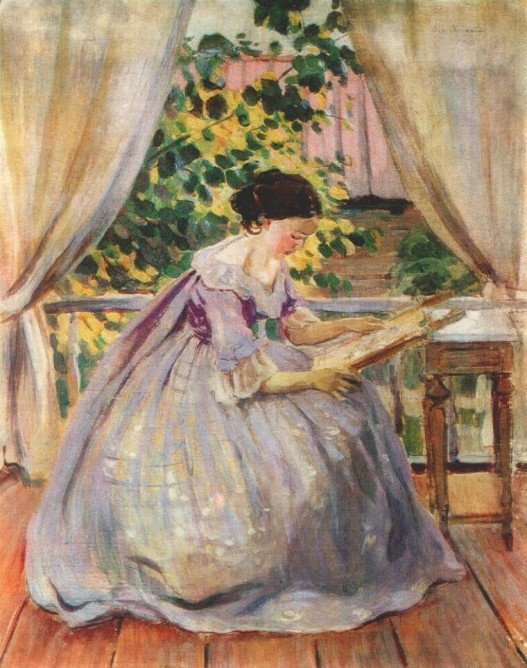
The stereotypical, historical image of the embroiderer is a refined young lady, sat at her frame, serenely rearranging threads to make beautiful artwork. The work is delicate, yet meticulously done, with no lapses in patience or temperament, all whilst wearing her Sunday best.

1
‘Lady Embroidering’ by Victor Borisov-Musatov

The reality of the crafter is distinctly less dignified. Dye up the kitchen walls, fridge and floor, needles in fingers and blood pooling on your whitework. Swearing. Frayed threads, wonky cutting and holes in places they were supposed to go. More swearing. Half-done projects abandoned to the back of cupboard, claims of never making a stitch again and of course, lots more swearing.

I think the myth of making things always being fun and relaxing is actually one of the things beginners can find off-putting. Unless you know how many hours of practice and learning it really takes to produce a fantastic piece, it can be really disheartening to have spent hours struggling with seams only to find you haven’t caught the raw edges properly or inconsistencies in your tension when knitting have resulted in a scarf that best resembles jelly.

For the most part, I really do love creating new projects. Daydreaming about colours, calculating up seam allowances, finally getting stuck in with the stitching. However, there are some projects that just seem to go wrong at every corner and the only joys in finishing the thing so you don’t have to look at it again.

Read More »

Silk Drying

3

My handpainted silks are finally dry! As you can see from comparison to the photos from the other post, some of the colours, particularly ones I’ve mixed myself, aren’t as intense as they were when the silk was still wet. However, some sections, particularly the red and green/yellow silks have come out with exactly the kind of colour saturation and intensity I was looking for. Lots of dye and aggressive mashing of the fibres seems to be the trick with handpainting. Thinning down the top beforehand did help but made it more difficult to handle, so I’m not sure it was worth it on reflection.

In general, I didn’t lose too much dye in the rising process but the turquoise sections took significantly more rinsing than any other colour. It’s remained a nice, saturated colour but I’m not sure if there’s something about that particular dye that meant it didn’t fix as well or maybe needed more vinegar in those areas.

12

Read More »

Yarn painting and silk

This Christmas, I treated myself to a rather sizeable delivery from World of Wool, including over half a kilo of lovely, mulberry silk. Unfortunately, I’ve not had much time to do much other than admire the packet but this weekend I fancied doing something a little less regimented than needlework and thought I’d have a go at some yarn painting.

silk_pile
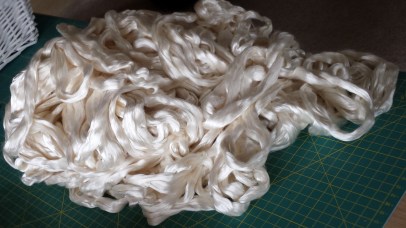
No such thing as too much silk!

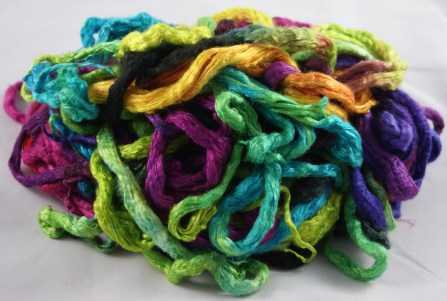
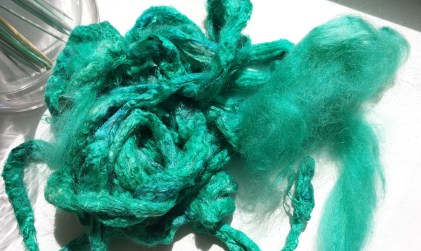
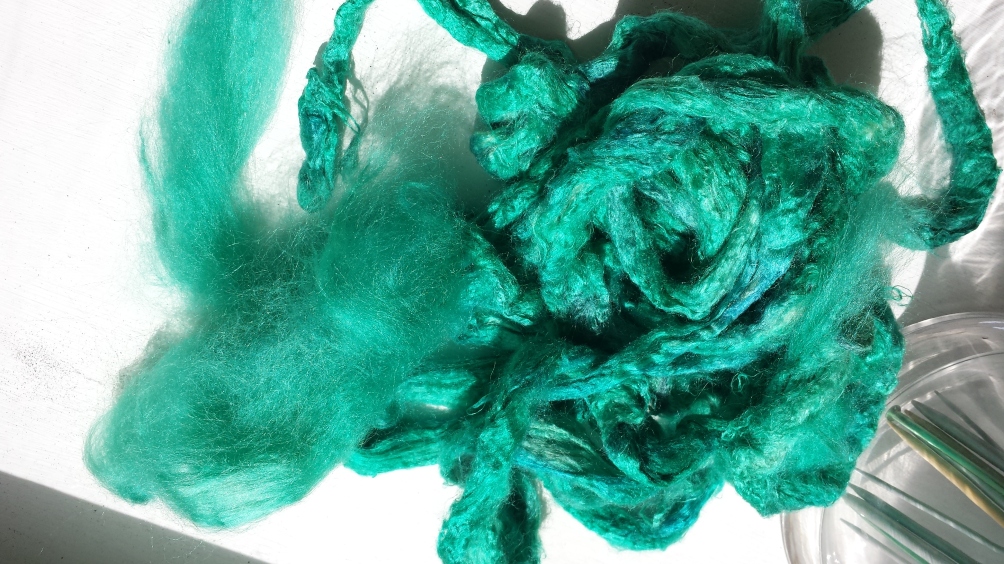
One issue I’ve had with some of the yarn painting I’ve done is that the colours don’t always look as saturated or intense when the yarn is dry as they do during the dyeing process. I dyed the silk below using mostly greens with some black and mid-blues mixed in as well. Apparently adding a few drops of black can help the colours look more intense.

dyed_top.jpg
Dyed silk top

Read More »