The Home of Saori Weaving

Although I was really in Japan for some hardcore temari studies, I couldn’t resist the opportunity to have a look for some weaving courses. It’s hard not to fall in love with the exquisite and wonderful world of Japanese textiles, in particular the world of 西陣織 (nishijin ori), the intricate weaving behind the most luxurious of fabrics.
1

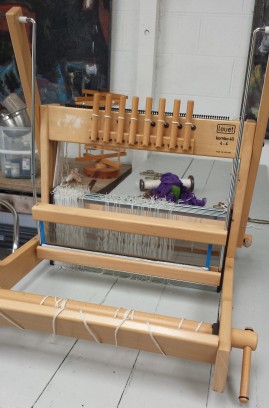
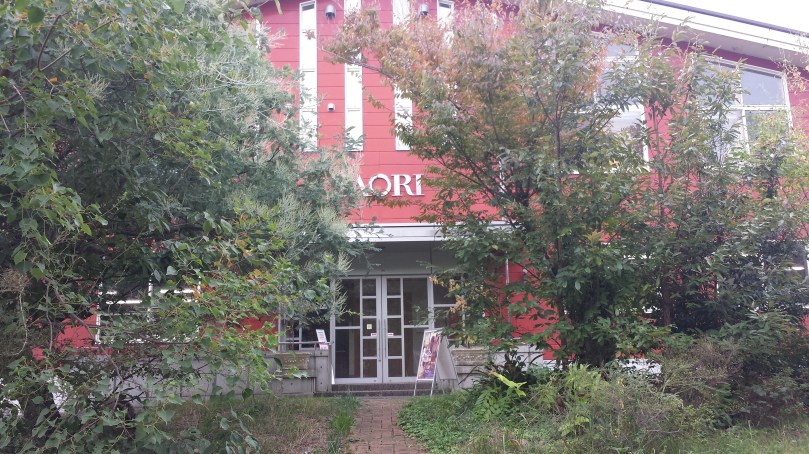
I’d done a weaving experience at the Nishijin Textile Factory where I made a scarf/table-runner hybrid with all the charm and textural properties of a bag of fleas. Past that, I haven’t had much luck finding short, drop-in weaving courses. That was until I had the opportunity to not only meet the creator of saori weaving but to study in her studio.
Read More »

Tutorial: Making Paper Quills

What do criminals and crafters have in common? According to the Oxford English Dictionary, quite a lot! Their definition of the noun ‘stash’ is as follows:

stash, n.1 slang (orig. and chiefly U.S.).

1 a. Something, or a collection of things, stashed away; a hoard, stock; a cache.

  1. A cache of an (illegal) drug; a quantity (of a drug); the drug itself.
  2. slang (orig. Criminals’). A hiding-place, a hide-out; a rendezvous; a dwelling, ‘pad’.

6.jpg

The meaning of the verb ‘to stash’ isn’t much better either:

  1. To bring to an end, stop, desist from (a matter, a practice); to quit (a place). Often imp. stash it!, stash that!, †to stash the glim: to cease using the light. to stash up: to bring to an abrupt end.
  2. To conceal, to hide; to put aside for safe keeping; to stow or store. Freq. with away. Formerly Criminals’ slang; orig. U.S. in revived mod. use.

Read More »

Mixing it up

When you first start dyeing, there’s an overwhelming range of colours to choose from. As well as thinking about what kind of materials you want to be dyeing, whether you are going to need any auxiliary chemicals for the techniques you want to use, you need to think about what set of dyes you’re going to use to get you started.

4

Now this is all a lot easier if you have an infinite budget and the cupboard space to match. You can just buy a bit of everything to try. Some suppliers offer ‘starter kits’ as well, with smaller amounts of a range of different dyes to get started. Many dyers will tell you though that all you need is a small select palette and you can mix the rest. So is it really worth investing in a big range of different dyes?

Read More »

Knotty Problems

Murdering skeins is a bit of a hobby of mine. I’m not sure where I developed quite such an aptitude for transforming beautiful bundles of fibre into Eldritch horrors of the knitted world but it’s about the least useful skill a crafter can have.

Sometimes it has been clumsiness or underestimating quite what a disastrous effect travelling can have on your supplies. Sometimes it has been my notorious impatience with wanting to dive into a new project. Other times, I swear I simply turn my back and when I turn around, I’m greeted with a sight that invokes the more colourful regions of the English language.

1

Read More »

Tutorial: Making a Raddle

Disclaimer: This post contains affiliate links. If you make any purchases via these links, I will receive a small percentage. For more information, please click here.

When you’re a child, there’s nothing more disappointing than getting some exciting new toy, only to find that it didn’t come with any batteries, they’re some obscure size you’d never have any spares of anyway and of course, it’s holiday season so you can’t just pop down to the shops either.

The grown-up version of this is having hauled some hefty piece of crafting equipment back home, precariously tied to your car, only to find you’ve forgotten some nut, bolt or screw that means you can’t fully assemble it immediately.

1.jpg

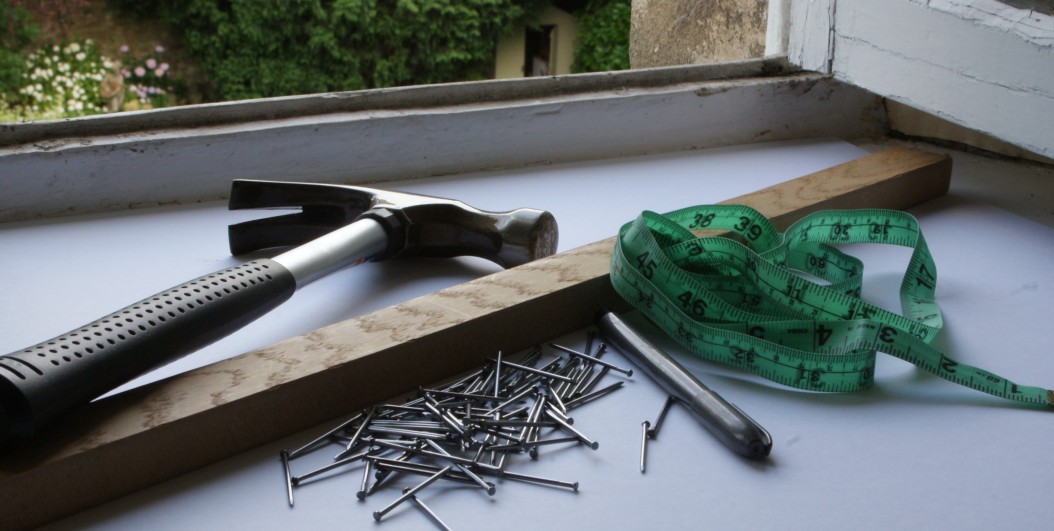
Luckily, particularly when it comes to weaving, necessity is the mother of invention and one of the true joys of adulthood is unfettered access to DIY stores and power tools. Plus, how often is it what you get to do is essentially crafting with a very heavy hammer?

Read More »

Dyeing to Weave

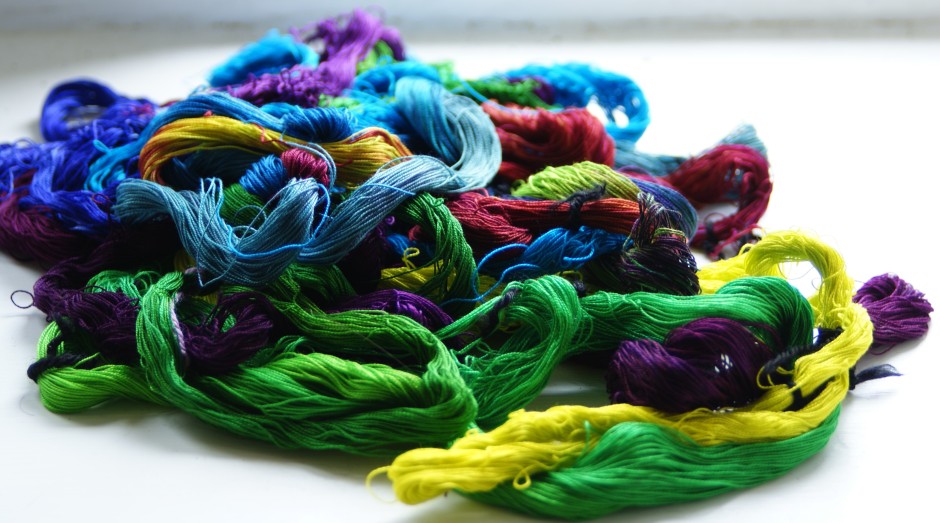
Sod’s Law for Crafters says that, no matter how big your stash, you still will never have the right material for the project at hand. Having recently started weaving, that saying is more true than ever. All of my non-acrylic yarns are committed to projects and I don’t have quite the volume of silk I’d need for a decent sized warp.

That meant it was time to indulge myself in a bit of ‘necessity’ shopping. Shopping for weaving threads is quite an experience, particularly as a UK resident. ‘wc’, ‘nm’, ‘cc’ are all units you might see, as well as various fractions, weight per length and often, a complete absence of any useful information.

5.jpg

Read More »

Lowell and the New England Quilting Museum

Disclaimer: This post contains affiliate links if you wish to support the blog. For more information, please click here.

Lowell is a city to the north west of Boston which birthed the American Industrial Revolution. As you walk around, you can still see the mills and textile factories that housed the first ‘power looms’ in America that automated large parts of the weaving process and manufactured the coarse cottons that take their name from the city.

1

After the Great Depression and decline of the textile industry, Lowell became something of an economic wasteland. However, now, Lowell has been transformed a National Historical Park, which is a slightly confusing name because the Park part refers to part of the city itself. A huge amount of effort has been made to preserve the history and make for an interesting and informative visit.

2

Read More »

Creating a Weaver: Day 1

There is nothing quite like getting stuck into a new thing. You haven’t quite yet realised how impossibly hard it will be to reproduce all the maddeningly complex projects you’ve been eyeing up on Pinterest and you’re new enough that you’re pleased by any new creation, no matter how wonky the stitches or sad the seams are.

It was back in Kyoto, at the Nishijin Textile Centre, that I first had a go at weaving. Nishijin is the legendary textiles district that gives its name to Nishijin-ori, the fabric produced there. It is known for its quality and the incredibly intricate patterns and designs in the weave that are often used for highly elaborate obis. In more modern times, nishijin-ori is often used in neckties or gamaguchi, the metal clasp purses that are very popular in Japan.

25.jpg
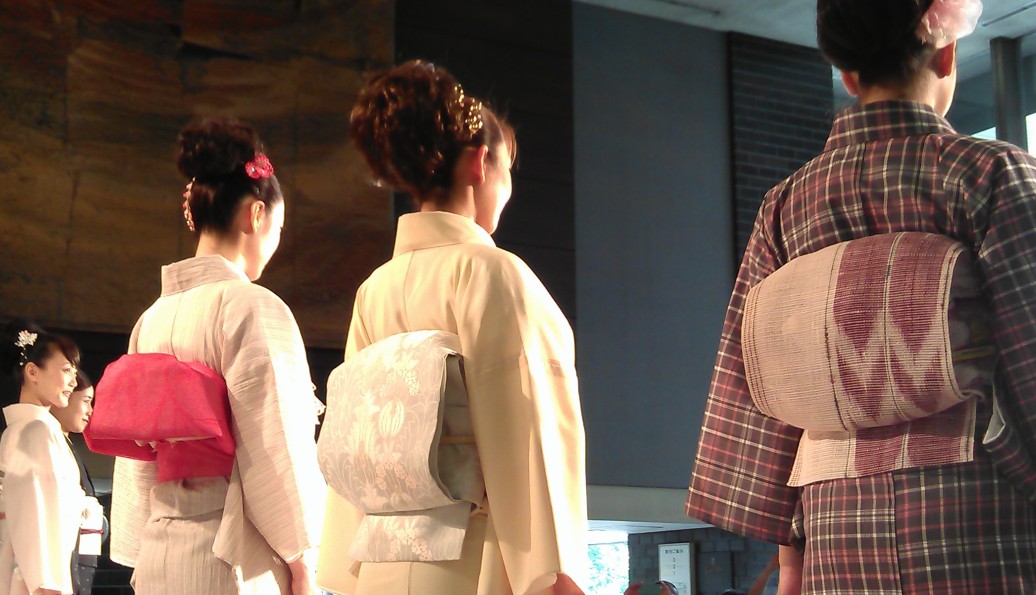
Kimono fashion show

Read More »